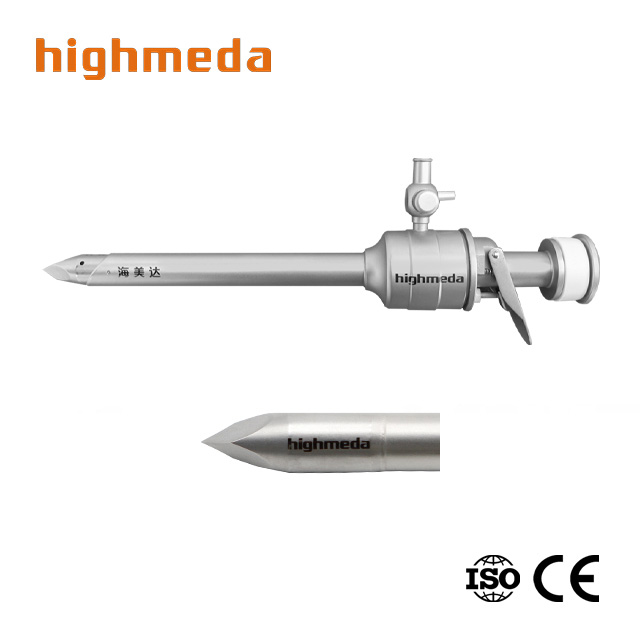
Did you know a flawless surgical entry often dictates the success of an entire procedure? As a medical device engineer, I frequently see hospitals struggle to cut operational waste without compromising an ounce of surgical precision. Transitioning to a high-quality reusable system solves this complex clinical challenge. However, choosing the right device goes far beyond the sticker price. It demands a rigorous understanding of sealing integrity, fixation mechanics, pressure relief ergonomics, and precise sizing.
Key Takeaways
Lifecycle ROI & Sustainability: Premium reusable systems drastically slash per-procedure costs and eliminate hundreds of pounds of medical waste compared to disposable plastics.
Airtight Sealing is Non-Negotiable: Advanced dual-valve mechanisms (like press-type designs) are critical to maintaining stable pneumoperitoneum during rapid instrument exchanges.
Secure Fixation Prevents Catastrophe: Precision-machined threaded cannulas anchor the device securely in the fascia, preventing dangerous accidental pull-outs.
Dimensional Accuracy Matters: Selecting the exact diameter and length ensures seamless compatibility with graspers and cameras while minimizing incision trauma.
Maintenance Dictates Performance: Strict adherence to CSSD cleaning and sterilization protocols unlocks the maximum lifespan of your surgical inventory.
Industry Trend Analysis: The Push for Sustainable Surgical Access
Recent market analyses on surgical equipment procurement reveal a definitive shift in how modern healthcare facilities view operating room supplies. Driven by supply chain vulnerabilities exposed over the past few years, the industry is moving rapidly toward durable, resilient medical devices. Procurement managers are no longer just buying tools; they are investing in sustainable clinical workflows.
Data indicates that hospitals adopting high-grade metal access systems report stabilized per-case profitability within the first year. By stepping away from volatile plastic manufacturing costs and unpredictable shipping delays, facilities gain localized control over their inventory. Furthermore, strict environmental mandates are pushing ORs to reduce their carbon footprint, making the transition to sterilizable instruments an operational necessity rather than a mere preference.
Why Hospitals Are Switching to Reusable Models
The global transition from single-use plastics to robust surgical hardware is accelerating. Department heads are meticulously evaluating the life-cycle value of their equipment, looking past initial capital expenditures to uncover true operational efficiency.
The ROI Reality: Disposable vs. Reusable
When evaluating surgical ports, the initial acquisition price frequently obscures the long-term financial reality. Disposable ports demand a continuous cycle of purchasing, shipping, and expansive inventory management. Conversely, a well-maintained reusable trocar requires a higher upfront investment but yields a significantly lower cost-per-case over time.
Financial models prove that these systems typically break even after just 30 to 50 sterilization cycles. Because the core components—specifically the heavy-duty 304 or 316L stainless steel obturator and cannula—can withstand hundreds of autoclave cycles, ongoing costs plummet. Your only recurring expenses are minor consumable parts, such as silicone sealing caps and O-rings.
Core Comparison: Reusable vs. Disposable Trocars
Feature
Reusable Systems (Stainless Steel)
Disposable Systems (Plastic)
Long-Term Cost
High initial cost, extremely low per-case cost. High ROI.
Generates massive amounts of bio-hazardous plastic waste.
Tactile Feedback
Superior. Solid metal provides distinct fascial feedback during entry.
Variable. Lightweight plastic can feel flimsy under pressure.
Maintenance Needs
Requires strict CSSD disassembly, brushing, and autoclaving.
None. Simply discard after use.
Pillar 1: Evaluating the Sealing Mechanism
Beyond providing initial abdominal access, the primary function of any port is to act as a secure gateway. It must prevent gas leakage at all costs. The integrity of this sealing mechanism is paramount to both patient safety and uninterrupted surgical efficiency.
The Critical Nature of Pneumoperitoneum
Picture a critical moment during a complex cholecystectomy. The surgeon swaps a delicate 5mm dissector for a heavy 10mm clip applier. Suddenly, a hiss of escaping CO2 collapses the working space. This loss of domain obscures the visual field, drastically increases the risk of inadvertent organ injury, and forces the anesthesia team to scramble. A constant, stable gas barrier is absolutely essential.
Valve Engineering: Press Type and Flip Type Designs
Modern reusable systems utilize sophisticated valve engineering to maintain this invisible gas barrier. For instance, the press type trocar mechanism is highly regarded in fast-paced clinical settings. This specific design employs a mechanical push-button valve that opens smoothly when an instrument is introduced. Upon removal, it snaps shut instantly, trapping the gas before the abdomen can deflate.
Similarly, flip-type valve housings offer rapid manual control. Regardless of the specific mechanics, the internal seal must be engineered to accommodate various instrument diameters—ranging from delicate scissors to robust staplers—without compromising the CO2 seal. High-quality models feature dual-sealing technology: a primary mechanical valve for when the port is empty, and a secondary cross-shaped silicone membrane that hugs the instrument shaft during active tissue manipulation.
Pillar 2: Fixation and Abdominal Wall Stability
A surgical port must penetrate the abdominal wall cleanly and remain firmly anchored. Unwanted movement of the cannula causes significant disruptions and unnecessary tissue trauma.
Solving the "Pull-Out" Problem
During rigorous procedures, surgeons frequently exchange instruments and apply lateral force. If a port lacks proper fixation, this friction drags the entire unit out of the incision. This "pull-out" results in an immediate, catastrophic loss of pneumoperitoneum. The surgical team must halt the operation, re-establish the port, and potentially enlarge the fascial defect, which directly increases the risk of postoperative hernias.
Threaded vs. Smooth Cannula Dynamics
To combat slippage, the exterior texture of the trocar cannula is vital. Smooth cannulas are easier to insert but offer minimal resistance against upward forces. In contrast, a precision-machined threaded (or ribbed) cannula acts like a specialized screw, gripping the fascial layers securely. The ideal design features blunt, atraumatic threading. It grips firmly under lateral tension but glides out smoothly when intentionally rotated by the surgeon at the end of the case, minimizing muscle tearing.
Pillar 3: Pressure Relief and Insufflation Control
Managing the intra-abdominal environment requires precise, immediate control over gas inflow and outflow. The pressure relief system serves as a vital interface for the entire operating room team.
Integrated Stopcocks and Manual Press Relief
Premium reusable models feature an integrated stopcock valve located near the housing head, connecting directly to the insufflation tubing. This allows the surgical assistant to rapidly manage CO2 inflow or quickly desufflate the abdomen. Furthermore, advanced manual press pressure relief designs allow for instantaneous venting with a simple thumb press. Precision machining here is crucial; a poorly manufactured valve will leak gas or jam mid-procedure.
Smoke Evacuation Compatibility
Modern electrosurgery generates dense surgical plume (smoke), obscuring the camera lens and posing inhalation risks to the staff. Advanced pressure relief valves are seamlessly compatible with standard luer-lock smoke evacuation filters. This integration allows for the continuous, controlled venting of surgical plume without causing a sudden, dangerous drop in abdominal pressure.
Pillar 4: Sizing Guide – Choosing the Right Diameter and Length
Selecting the correct physical dimensions for your laparoscopic access instrument is essential. Port placement and sizing dictate exactly which tools can be used and directly impact the patient's cosmetic outcome.
Standard and Specialty Diameters
Operating rooms must maintain a well-rounded inventory of various diameters to accommodate different surgical steps fluidly.
5mm / 5.5mm: The undisputed workhorses of the OR, used primarily as working ports for graspers and scissors. They rarely require deep fascial closure.
10mm / 10.5mm & 12.5mm: Mandatory for the primary laparoscope, surgical staplers, and specimen retrieval bags.
Specialty Sizes (3mm & 8mm): Ultra-slim 3mm ports are vital for pediatric surgery, while 8mm ports bridge the gap for advanced robotic-assisted platforms.
Cannula Length Selection
The length of the cannula must correspond to the patient's body mass index (BMI) and the anatomical entry point.
Standard Lengths (70mm - 100mm): Suitable for the vast majority of routine abdominal procedures.
Bariatric Lengths (120mm - 150mm): Absolutely essential for patients with a thickened abdominal wall. Using a standard-length port here risks the cannula slipping out of the peritoneal cavity and deploying gas into the preperitoneal space—a severe complication.
Bladeless vs. Bladed Tips in Reusable Systems
The design of the obturator tip dictates how the instrument penetrates the tissue, impacting both recovery speed and hardware maintenance.
Clinical consensus has shifted heavily toward bladeless (optical or separating) obturator tips. Instead of slicing through tissue like a scalpel, bladeless tips feature a tapered, finned design that gently parts muscle fibers. Upon removal, these fibers naturally retract, significantly reducing port-site hernias. In a reusable ecosystem, bladeless tips are highly advantageous because they do not rely on a razor-sharp edge that inevitably dulls and requires constant sharpening.
Longevity, Maintenance, and Sterilization Protocols
The financial and clinical benefits of these instruments are entirely dependent on your hospital's Central Sterile Services Department (CSSD). Proper reprocessing is absolutely non-negotiable.
Unlike simple hand instruments, reusable access devices must be completely dismantled. Blood, fat, and bioburden easily become trapped inside the cannula lumen or beneath the sealing caps. CSSD technicians must disassemble the obturator, cannula, and valve housing entirely. Components must undergo enzymatic soaking, rigorous manual brushing, and ultrasonic cleaning before terminal sterilization. Because premium models are constructed from 304/316L medical stainless steel and high-temperature polymers like PEEK, they easily withstand standard steam sterilization (up to 134°C) without warping.
Actionable Procurement Checklist for Hospital Buyers
Before finalizing a major capital purchase, apply this objective engineering checklist to evaluate potential vendors:
Modular Disassembly: Can the device be easily dismantled without special tools? Are replacement seals readily available?
Sealing Empirical Data: Does the manufacturer provide testing data proving zero CO2 leakage during rapid instrument exchanges?
Fixation Profile: Does the atraumatic threading match the clinical preferences of your lead surgeons?
Material Grade: Are the components certified 304 or 316L stainless steel, guaranteed against autoclave oxidation?
Valve Ergonomics: Is the stopcock or manual press relief mechanism smooth enough to operate with a single gloved hand?
Conclusion
Choosing a reliable reusable laparoscopic system requires a multi-faceted clinical and engineering evaluation. Facility leaders must balance sealing integrity, fixation strength, pressure relief ergonomics, and proper sizing. High-quality reusable instruments not only slash long-term operational costs but also drastically reduce environmental waste.
Always prioritize airtight dual-sealing mechanisms and highly durable, surgical-grade steel construction. While the initial investment is higher than disposables, the clinical reliability and long-term financial ROI make it a superior choice for forward-thinking surgical centers. Ready to upgrade your OR inventory? Consult your surgical team and reach out to high-quality manufacturers like Highmeda Medical to find the exact specifications and customized solutions your facility demands today.
FAQ (Frequently Asked Questions)
How many times can a reusable laparoscopic trocar be used?
The lifespan depends heavily on the specific component and CSSD protocols. Primary metal components (stainless steel cannula and obturator) can typically withstand hundreds of sterilization cycles. However, soft consumable components, such as silicone sealing caps and internal O-rings, are subject to thermal degradation and mechanical wear. These seals generally need replacement every 20 to 50 uses to maintain an airtight pneumoperitoneum.
What are the most common sizes of laparoscopic trocars used in general surgery?
The most universally utilized sizes are 5mm (or 5.5mm) and 10mm (or 10.5mm). The 5mm ports act as standard working channels for graspers and dissecting scissors. The 10mm or 12mm ports are essential for introducing the laparoscope camera, surgical staplers, and specimen retrieval bags. Having a standardized mix of these sizes ensures fluid surgical workflow.
What is a press type trocar, and why is it popular?
A press type mechanism utilizes a mechanical push-button valve system to manage the internal gas seal. When pressed, the valve opens completely, allowing frictionless insertion or extraction of delicate instruments (like camera lenses). Once released, it snaps shut, creating an immediate seal. It is highly popular because it minimizes physical wear on the silicone seals and prevents camera smudging.
How do you test the seal of a reusable trocar before surgery?
CSSD technicians and OR nurses should perform a visual and functional inspection before sterilization and prior to the case. Visually inspect the silicone caps and internal cross-valves under magnification for micro-tears or stretching. Functionally, ensure the mechanical valve or flip-top springs back crisply without sticking. If any resistance or visible gap is present, the consumable seal must be replaced immediately.
Can I mix and match trocar cannulas and obturators from different brands?
No, this is strongly advised against. Surgical instruments are engineered with highly precise micro-tolerances. An obturator from one brand may be fractions of a millimeter too wide or narrow for another brand's cannula. A mismatched fit can jam the device, damage internal valves, or create a jagged transition at the tip, leading to severe tissue tearing during entry.
How do you prevent a surgical trocar from slipping out during surgery?
To prevent "pull-out," surgeons should select a cannula with an aggressively threaded or ribbed exterior to securely grip the fascia. Additionally, the initial skin incision must be precisely sized; a poorly sized incision will fail to anchor the cannula regardless of its texture. Secondary fixation devices or temporary sutures can also provide extra stability.
Are reusable trocars harder to sterilize than other surgical instruments?
They require more meticulous attention than single-piece instruments like scalpels. Because they feature hollow lumens and multi-part valve housings, they are susceptible to hidden bioburden buildup. However, if the sterile processing department strictly follows the manufacturer's instructions for complete disassembly, enzymatic soaking, lumen brushing, and ultrasonic cleaning, standard hospital autoclaving is highly effective and safe.