While the clinical benefits of minimally invasive surgery are universally proven, operational reality tells a different story. The reliability and ergonomics of the tools used dictate the actual efficiency of your operating room. Subpar equipment often leads to delayed schedules. It also frustrates your dedicated surgical teams during critical moments.
Hospital procurement teams face a heavily saturated medical market. Choosing the right equipment requires balancing upfront expenses against durability. You must also consider surgeon fatigue and stringent sterile processing standards. Decision-makers must look far beyond simple unit prices. Understanding how these tools impact clinical workflows remains essential.
This guide outlines the core categories of surgical devices you need. We establish an objective framework for evaluating medical vendors. We also highlight hidden implementation risks occurring after purchase. You will gain actionable insights to support much smarter procurement decisions.
Key Takeaways
Categorization impacts procurement: Laparoscopic instruments are grouped by clinical function (access, manipulation, dissection, hemostasis), each requiring specific material and regulatory standards.
Ergonomics equal OR efficiency: Instrument design directly impacts surgeon fatigue during complex procedures, making ergonomic evaluation a non-negotiable step in shortlisting.
Lifecycle costs trump unit price: The true cost of reusable instruments must account for sterilization cycles, repair rates, and potential OR downtime caused by insulation failures.
Vendor compliance is mandatory: Evaluating manufacturers requires strict verification of FDA/CE certifications, supply chain transparency, and sterile supply management compatibility.
Core Categories of Laparoscopic Instruments
Access and Exposure Devices
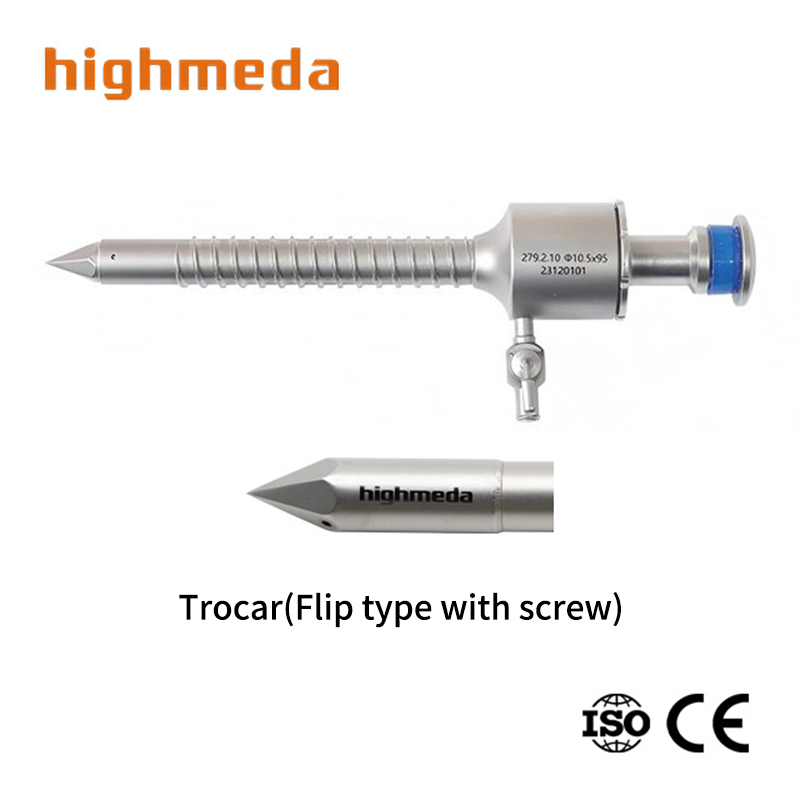
Trocars and cannulas act as the foundational gateways for any minimally invasive procedure. Surgeons rely on them to pass cameras and specialized tools safely into the abdominal cavity. You will generally encounter three primary trocar designs. Bladed trocars feature sharp cutting tips for rapid fascia penetration. Optical trocars incorporate a clear tip. This allows surgeons to insert a laparoscope and visualize tissue layers during entry. Blunt trocars separate delicate muscle fibers gently rather than cutting them.
Hospital administrators constantly debate the business case for disposable versus reusable access ports. Single-use ports guarantee pristine sharpness for every procedure. They entirely eliminate cross-contamination risks associated with challenging cleaning protocols. Reusable options require meticulous manual scrubbing. However, they drastically reduce medical waste generation. Selecting standard laparoscopic instruments demands careful analysis of your hospital infection rates.
Veress needles play a specialized role before trocars even enter the body. Surgeons use them to infuse carbon dioxide and create a working pneumoperitoneum. These needles feature a critical spring-loaded inner stylet. As the needle breaches the fascia, the blunt stylet springs forward automatically. This mechanical safety feature protects internal organs from accidental puncture.
Tissue Manipulation and Grasping
Graspers and forceps serve as extensions of the surgeon's hands. Their jaw designs vary significantly based on targeted clinical applications. Atraumatic jaws feature smooth or finely fenestrated surfaces. Surgeons use them to handle delicate structures like the bowel. Traumatic jaws incorporate aggressive teeth. They grip dense tissues like the gallbladder securely during extraction.
Jaw action mechanics also influence operational utility. Single-action jaws keep one blade stationary while the other moves. This design provides superior pinch force for heavy manipulation. Double-action jaws allow both blades to open simultaneously. This mechanism offers a wider grasping aperture in confined anatomical spaces.
Handle ratcheting mechanisms drastically reduce continuous hand strain. Surgeons squeeze the handle to close the jaws and engage the ratchet. The instrument locks securely onto the tissue. Operators can then release their grip entirely. This specific feature prevents debilitating muscle fatigue during lengthy surgeries.
Dissection and Hemostasis
Scissors and dissectors perform the intricate work of separating tissue planes. Scissors demand sustained blade sharpness and precise jaw alignment. Poorly aligned blades crush tissue instead of cutting cleanly. This localized trauma prolongs patient healing times unnecessarily. Surgeons rely on curved Metzenbaum-style scissors for precise anatomical dissection.
Electrosurgical energy instruments manage intraoperative bleeding effectively. Monopolar devices pass electrical current from the instrument tip through the patient to a grounding pad. They deliver highly versatile cutting and coagulation. Bipolar tools pass current only between the two instrument jaws. This limits lateral thermal spread, offering a safer approach near vital nerves.
Both energy modalities require impeccable shaft insulation. Degraded or compromised insulation poses severe dangers. Stray electrical currents can leak through microscopic cracks. This phenomenon causes unintended thermal burns to adjacent healthy organs. Preventing such injuries requires rigorous safety standards.
Key Evaluation Dimensions: Moving from Features to Clinical Outcomes
Material Quality and Durability
Top-tier instruments utilize high-grade medical stainless steel. Many modern tools also incorporate advanced carbon fiber components. High-quality materials inherently resist aggressive corrosion. They withstand structural degradation occurring after repeated high-temperature autoclaving cycles. Substandard alloys pit and rust quickly. This degrades mechanical performance and creates breeding grounds for dangerous pathogens.
Evaluating material quality involves inspecting moving joints and hinge mechanisms. Premium stainless steel maintains structural rigidity under heavy lateral torque. Lesser materials bend or snap inside the patient. Carbon fiber handles reduce overall instrument weight significantly. This specific weight reduction benefits surgeons performing back-to-back procedures.
Ergonomics and Surgeon Adoption
Hospital leaders must frame instrument ergonomics as a serious risk management issue. Poorly designed handles force unnatural hand postures. This directly leads to repetitive strain injuries (RSI) for surgical staff. RSI cases cause prolonged medical leaves and staffing shortages. Uncomfortable tools also extend overall procedure times.
Procurement committees should evaluate distinct handle types closely. Inline handles resemble standard scissors. They work well for delicate, precision-focused movements. Pistol grip handles conform naturally to the closed palm. They provide optimal leverage for heavy grasping tasks. Surgeons must test these grips to ensure they accommodate varying glove sizes.
Reusable vs. Single-Use (Disposable) Economics
Comparing the financial impact of distinct instrument types requires objective analysis. Reusables demand significant upfront capital investment. They also generate continuous processing expenses within the sterilization department. Single-use devices offer highly predictable per-procedure expenses. They present zero cross-contamination risks.
However, single-use tools generate higher environmental waste. They heavily impact recurring quarterly budgets. Purchasing premium laparoscopic instruments stabilizes long-term equipment budgets. It shifts financial burdens away from constant reordering toward maintenance. Facilities must weigh these contrasting models based on their unique surgical volumes.
Table 1: Economic and Operational Comparison of Instrument Models
Factor
Reusable Instruments
Single-Use (Disposable) Instruments
Upfront Investment
High initial capital required
Low initial capital required
Per-Procedure Expense
Low (mostly sterilization labor/utilities)
High (must repurchase per case)
Cross-Contamination Risk
Present (depends on cleaning efficacy)
Zero risk
Environmental Impact
Low waste generation
High physical waste generation
Maintenance Needs
Requires repairs, sharpening, and testing
None
Implementation Risks and Sterile Supply Management
The Hidden Costs of Instrument Failure
Instrument failures rarely announce themselves dramatically. They usually manifest as microscopic defects. Micro-cracks in electrosurgical insulation compromise patient safety silently. Dull scissor blades force surgeons to apply dangerous physical pressure. These seemingly minor issues lead directly to delayed surgery schedules. In severe cases, they cause direct patient complications requiring immediate readmission.
A broken grasper ratchet during a complex cholecystectomy halts progress completely. The surgical team must pause to locate a functional replacement. This wastes expensive operating room minutes. It prolongs patient anesthesia exposure unnecessarily. Ensuring flawless mechanical integrity prevents these expensive logistical nightmares.
Processing and Sterilization Challenges
The Central Sterile Services Department (CSSD) bears the immense burden of instrument maintenance. Standard minimally invasive tools present unique cleaning challenges. Long, narrow lumens trap bioburden easily. Complex hinges harbor dried blood and microscopic tissue fragments.
Instruments containing non-detachable, intricate parts are notoriously difficult to clean. They increase the statistical risk of retained bioburden significantly. Retained organic matter shields bacteria from high-level sterilization temperatures. This directly elevates post-operative infection rates.
We strongly recommend prioritizing modular instruments. Modular designs disassemble quickly into discrete parts. This allows technicians to flush internal shafts thoroughly. To optimize sterile processing workflows, CSSD teams should follow these standardized steps:
Perform immediate point-of-use pre-cleaning in the operating room.
Disassemble all modular components completely upon arrival at the decontamination zone.
Submerge parts in specialized enzymatic detergents to break down stubborn proteins.
Utilize ultrasonic cleaners to dislodge microscopic debris from narrow hinges.
Conduct rigorous visual inspections under magnification for insulation integrity.
Subject all verified components to final high-level autoclave sterilization.
Shortlisting Logic: How to Evaluate Manufacturers and Vendors
Regulatory Compliance and Certification
Choosing a medical vendor requires absolute regulatory certainty. Procurement teams must request verifiable documentation before initiating commercial discussions. Demand clear proof of FDA 510(k) clearance or appropriate CE marking. Ensure the manufacturer holds active ISO 13485 certification. This standard confirms rigorous quality management systems.
Avoid any vendors offering opaque manufacturing origins. A reliable partner gladly shares their detailed production processes. They provide full traceability for every batch of raw materials used. Transparent compliance protects your hospital from massive legal liabilities later.
Supply Chain Reliability and Post-Sale Support
Even the finest instruments require periodic replacement. Evaluate the vendor’s proven ability to maintain steady regional inventory. Backorders on essential trocars or dissecting scissors disrupt scheduled surgeries rapidly. Ask potential partners about their historical order fulfillment rates during global supply shortages.
Post-sale support defines a truly valuable vendor partnership. Assess their offered warranty terms meticulously. Investigate their stated repair turnaround times. Ask if they provide dedicated loaner instruments during routine maintenance cycles. Securing loaners prevents unacceptable operating room downtime while your primary tools undergo servicing.
Conducting In-Service Trials
You should never finalize a bulk purchase based purely on digital catalogs. Advise your evaluation committee to request comprehensive sample sets. Conduct extensive "in-service" clinical evaluations. Have your lead surgeons utilize these tools during live procedures or highly realistic simulated trials.
Surgeon feedback remains the most reliable indicator of eventual product adoption. If surgeons dislike a handle design, they will refuse to use it. When clinical teams endorse an instrument's tactile feedback, implementation proceeds smoothly. Use the following criteria during your evaluation phases:
Assess jaw alignment precision under microscopic review.
Measure hand fatigue after thirty minutes of continuous simulated usage.
Verify the smoothness of all rotational knobs and ratcheting mechanisms.
Evaluate the ease of modular disassembly for CSSD technicians.
Conclusion
Procuring surgical instruments is never a simple commodity purchase. It represents a critical investment in operating room efficiency. It heavily influences surgeon safety and dictates ultimate patient outcomes. Your final selection directly impacts daily hospital operations across multiple departments.
Balance immediate budget constraints against long-term clinical value. Prioritize ergonomic designs to protect your surgical staff from repetitive injuries. Demand robust sterilization compatibility to safeguard your vulnerable patients. Modular designs offer exceptional versatility and simplify essential cleaning protocols.
Take definitive action today to optimize your surgical inventory. Download our comprehensive vendor evaluation checklist. Request a detailed product catalog from certified manufacturers. You can also schedule a personalized consultation with a dedicated medical device specialist to streamline your procurement strategy.
FAQ
Q: What is the average lifespan of a reusable laparoscopic instrument?
A: Lifespan depends heavily on sterilization cycles rather than strict timeframes. Most high-quality reusable instruments endure between 100 and 300 autoclave cycles. Delicate tools like scissors degrade much faster due to required sharpness. Blunt graspers generally last longer. Proper modular disassembly and routine maintenance extend this functional lifespan significantly.
Q: How do standard laparoscopic instruments differ from robotic surgical instruments?
A: Standard tools provide limited degrees of freedom, typically moving in straight lines. They rely entirely on the surgeon's manual wrist movements. Robotic instruments feature complex articulating wrists, mimicking human joint flexibility perfectly. However, robotic tools cost significantly more and strictly limit the number of permitted uses per unit.
Q: What is the best way to test the insulation of electrosurgical laparoscopic tools?
A: Visual inspection alone cannot detect dangerous microscopic cracks. Sterile processing departments must utilize active insulation testers or porosity detectors. These specialized devices pass a low-voltage electrical current over the insulated shaft. They trigger an audible alarm if they detect any pinhole leaks, ensuring maximum patient safety.
Q: Can modular laparoscopic instruments actually save hospitals money?
A: Yes. Modular systems allow hospitals to replace single broken components rather than the entire device. If a jaw tip dulls or a handle ratchet breaks, you only purchase that specific part. This component-level replacement strategy dramatically reduces ongoing repair expenses and hardware replacement budgets over time.